How to Choose a Plasma Cutting Machine: Industrial Selection Guide
To choose a plasma cutting machine that aligns with your industrial production goals, you must look beyond basic price comparisons to evaluate specific thermodynamic parameters and structural frame dynamics. Purchasing a system with insufficient power leads to incomplete pierces and heavy dross, while over-specifying your machinery results in unnecessary capital overhead. At Jinan Allwin CNC Machinery Co., Ltd. (Fwincnc), we analyze workpiece dimensions, duty cycles, and shop floor space to help fabricators choose a plasma cutting machine configuration that optimizes daily output.
1. Material Thickness and Amperage Calibration
The primary technical specification to isolate during your machine evaluation is the relationship between production cutting thickness and power source amperage output. Many buyers make the mistake to choose a plasma cutting machine based on its “severance thickness” limit rather than its “rated quality cut” capacity.
-
Quality Cut Capacity: The thickness range where the torch maintains a perpendicular 90-degree edge finish, stable kerf width, and minimal dross accumulation under continuous operation.
-
Maximum Pierce Capacity: The maximum material thickness the torch can puncture from a standstill using a standard Torch Height Control (THC) pierce delay without destroying the shield cup via molten slag blowback.
-
Severance Capacity: The absolute mechanical limit the torch can cut starting from an open edge, resulting in high edge angularity and slow travel speeds.
For regular workshop processing of 16 mm carbon steel, a 100 Amp power source is optimal. If your primary material thickness shifts to 25 mm or greater, you must choose a plasma cutting machine with a high-definition 200 Amp or 300 Amp power supply to sustain automated industrial line speeds.
2. Structural Configurations: Gantry, Portable, and Pipe Cutting Systems
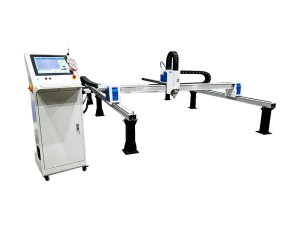
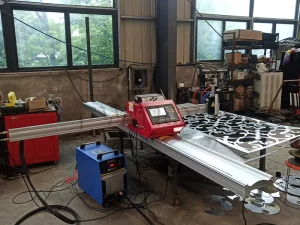
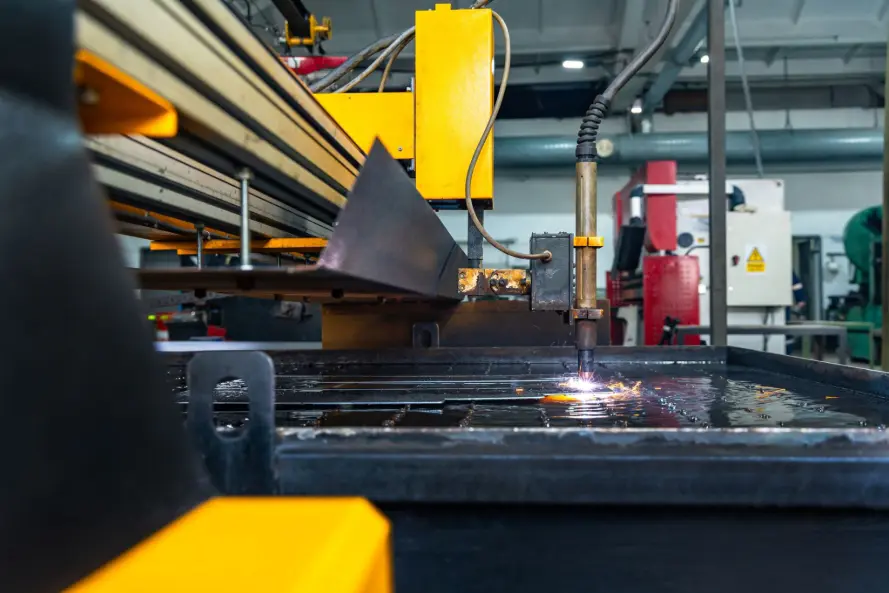
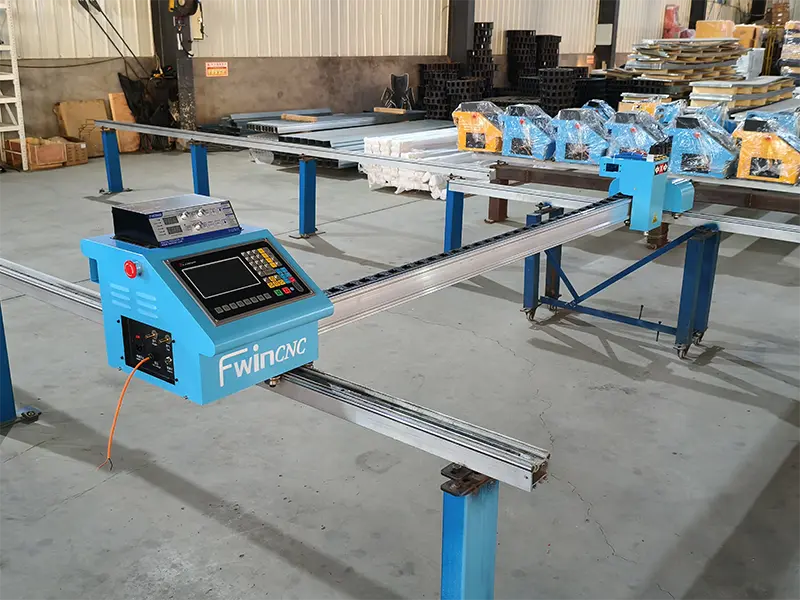
The physical geometry and mechanical footprint of the CNC frame must align directly with the material profiles handled inside your workshop. To choose a plasma cutting machine structure effectively, evaluate these three primary categories:
| Machine Frame Type | Typical Footprint | Production Thickness Range | Primary Application Focus |
| Portable Plasma Systems | Compact, detachable track layout | 2 mm to 15 mm | Small-scale workshops, on-site construction, and irregular job-shop tasks |
| Gantry Plasma Systems | Large heavy-duty bed (e.g., 2000×4000 mm) | 6 mm to 50 mm plus | High-volume industrial fabrication, heavy plate nesting, and multi-shift operations |
| Pipe Cutting Systems | Linear axis with automated rotary chuck | Wall thickness 2 mm to 20 mm | Structural steel pipe profiling, beveling, intersection cutting, and pressure vessel manufacturing |
If your workshop handles a mix of flat sheet metal and cylindrical tubes, a hybrid option like a Plate and Tube Integrated Plasma Machine allows you to choose a plasma cutting machine setup that offers a space-saving compromise, using a single CNC controller to alternate between a flat gantry bed and an external rotational axis.
3. Duty Cycle Limits and Pneumatic Logistics
A plasma machine cannot deliver stable performance without adequate electrical and air logistics infrastructure. When you plan to choose a plasma cutting machine, always verify these utility thresholds:
Understanding Duty Cycle
The duty cycle represents the percentage of a 10-minute period that the plasma power source can fire continuously at a given amperage before overheating. For example, a machine rated for a 60 percent duty cycle at 100 Amps can run for 6 minutes continuously before requiring 4 minutes of idle fan cooling. For continuous high-volume nesting lines, you should choose a plasma cutting machine rated for a 100 percent duty cycle to prevent mid-program thermal shutdowns.
Compressed Air Requirements
Plasma cutting relies heavily on gas dynamics to constrict and cool the arc column. Your shop compressor must deliver a stable dynamic pressure—measured while air is actively flowing through the torch nozzle—of 6 bar to 7 bar. Furthermore, implementing multi-stage air dryers is vital; any trace moisture or oil mist will undergo thermal cracking within the 10000 degrees Celsius arc zone, accelerating electrode wear and causing irregular cut profiles.
4. The Step-by-Step Workshop Evaluation Process
To choose a plasma cutting machine that fits efficiently into your production floor layout, your engineering team should execute the following evaluation sequence:
Pro Tip: When cutting highly reflective or thin-gauge metals like stainless steel under 3 mm, check if a low-amperage fiber laser cutter might serve your needs better. Plasma systems dominate in cost efficiency for thick carbon steel plates but can leave a wider heat-affected zone on thin alloy sheets. As you choose a plasma cutting machine, make sure to match the tool to the metallurgical properties of your target material.